Entries by Philip Turner

How We May Grow Even After Losing a Part of Ourselves

Naked Imperfection was my #FridayReads last weekend, and it gripped me straight through until early this week. Gill Deacon is the host of CBC Radio’s daily afternoon show from Toronto, Here and Now, with a voice that’s good company on the air, and which translates well in print. Prior to her broadcasting career, she was an environmental journalist and consumer health advocate. She lived consciously and consumed carefully, avoiding products that could harm her, her family, and her fellow denizens of the earth. She wrote an earlier book called There’s Lead in Your Lipstick. This made her all the more ill-prepared when she received a chilling diagnosis of breast cancer. She propels her narrative forward rapidly, in modified stream-of-consciousness style, with many of her paragraphs built of staccato sentences, like this one, after she’s had a mastectomy: “Tonight, as Grant and I move between the sheets in the blue-grey, pixelated, late-night bedroom light, I look down at my chest. A single orb of flesh presses up against my husband’s chest, its twin felled—an abandoned goddess, carrying on alone. Beside it, the graveyard of ribs. I am snatched by the escapist pleasure of my husband’s touch by the reminder of what had happened. Mourning the imperfect body I once had. I wish I still had two breasts. Sometimes the sadness surfaces like a beluga gasping for air. How can I be grateful for being misshapen.” The closing chapters were so well-crafted, I slowed my reading, lest I finish the book too quickly. I kept paging back to re-read passages I’d just read, so apt were they about living a full life, even if an imperfect one. After writing candidly about the prosthetic breast she got after her surgery, Deacon ends her book, some years in to the slow-motion crisis, with good news from her doctor, who “used the words cancer and gone in the same sentence. ‘Go out and live your life,’ she said with a smile. ‘You’re always going to have more doctor’s appointments than most of your friends, and technically it takes more than five years before the odds of you getting cancer drop down to match the general population, but for all intents and purposes your cancer is gone. Get back to whatever you were doing before this disease rang your bell.'”

Much of my recent reading and other cultural consumption has featured people who through accident or illness have endured the loss of parts of themselves, like Miles O’Brien, whom I tweeted about above. To his credit, he not only wrote in New York magazine about the frightening accident—when on a reporting trip to the Philippines last February he suffered an accident that led to the amputation of his left arm—he also reports on the neurological sources of phantom pain, and the design and engineering of high-tech prosthetics, a field that’s burgeoning due in part due to the return home of many wounded veterans of the wars in Iraq and Afghanistan, and the growth of miniature electronics.(Photo: Christopher Anderson/Magnum Photos/New York Magazine)

Relatedly, I later listened to a gripping episode of a new CBC radio series called Live Through This. It featured an account of Paul Templer, a wilderness guide in Zimbabwe who survived an attack by an aggressive hippo that nearly killed him, though he lost an arm in the melee, during which he was for some time in the gaping mouth of the animal. Templer healed and was fitted with a prosthetic arm. He later guided another trip down the Zambezi River, to raise money that will help victims of land mine explosions receive prosthetic devices of their own.

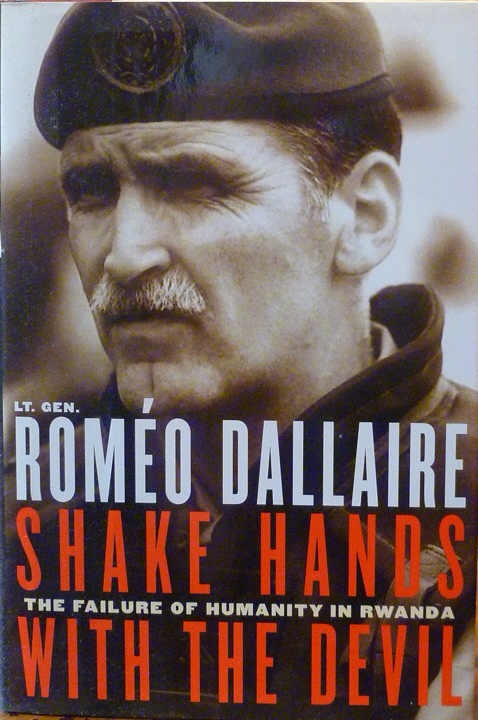
These incidents reminded me of what my longtime author Lt General Roméo Dallaire told me in 2006, when he was in New York City, promoting Carroll & Graf’s edition of his Canadian bestseller, Shake Hands with the Devil: The Failure of Humanity in Rwanda. Reflecting on the PTSD he’s been afflicted with ever since, as commander of the under-manned UN Peacekeeping Force in Rwanda in 1993 he endured the searing experience of trying to prevent the genocide, he told me: “When I slip into depression, the medicines and therapy act like a prosthetic and keep me from falling.”
It occurs to me that in some ways human evolution is a long-running narrative of the development of various kinds of prostheses, from the first crutch to aid a hobbled walker, to the development of finely ground lenses for eyeglasses, the fitting of dental plates (the latter two are prostheses that I use every day), limbs, and other miscellaneous body parts. Even the wheel can be seen in this light as an aid to our daily work, and the club or hammer. Whether affixed and integral to our body; an extension of our hand or arm; or wholly apart from our person, it it fair to say that tools = prosthetics, and vice versa.

These were among the reflections stirred up in me while reading Gill Deacon’s astonishingly fine memoir, a superb first person narrative. I recommend it if you want to read a candid memoir, and if you, or a friend or relative, has been ill. There’s lots of hope and bright humor in this honest book.

 

N.B. Gill Deacon’s book is the second terrific memoir I’ve read by a female Canadian writer in the past few months, the earlier one having been Jan Wong’s Out of the Blue, which I made a #FridayReads last March 14 and wrote about again on March 21, after I’d finished it.

When People Wish They Could Re-chart the Course of History

Tandey paintingKudos to the Toronto Star for running this story on a fascinating historical what-if that is examined in a new nonfiction book, The Man Who Didn’t Shoot Hitler: The Story of Henry Tandey VC and Adolf Hitler, 1918 by David Johnson. In a surprising twist, the mystery, a sort of urban legend about Hitler, is rooted in the painting shown here, depicting the aftermath of a battle in France, in 1914, early in WWI.

Star reporter Stephanie MacLellan writes that the oil painting—featuring the most-decorated British private, Henry Tandey, carrying a comrade on his shoulders—was commissioned in 1923 by Tandey’s regiment, the Green Howards, executed by war artist Fortunino Matania from a drawing made by a company draughtsman during a lull in fighting when a military hospital was being evacuated.

Many historians, including Tandey biographer Johnson, believe that Hitler was prone to embellishing his WWI record. For instance, his work as a runner, shuttling messages, was entirely behind friendly lines, not near hostilities. MacLellan picks up the tale in the 1930s, after Hitler had been elected to the office of German Chancellor:

“One of the German medical officers at First Ypres, [had been] a Dr. Schwend, [who] went on to join Hitler’s staff. According to Tandey biographer Johnson, Schwend stayed in touch with one of the British soldiers he treated, and in December 1936, the soldier sent him a copy of the Matania painting…. Hitler had his staff order a large photograph of the painting from the Green Howards. His aide sent a note thanking them for the artwork that captured a scene from Hitler’s first battle: ‘The Fuehrer is naturally very interested in things connected with his own war experiences. He was obviously moved when I showed him the picture. He has directed me to send you his best thanks for your friendly gift which is so rich in memories.’

“Hitler hung the photo in the study of his Bavarian retreat. It was here in September 1938, the story goes, that it was spotted by British Prime Minister Neville Chamberlain, who had come to Germany in his famed attempt to secure ‘peace in our time.’ According to [a] 1940 Canadian Press story, Chamberlain asked his host about this unusual artistic choice. ‘That man came so near to killing me that I thought I should never see Germany again,’ Hitler told him, pointing to Tandey. ‘Providence saved me from such devilish accurate fire as those English boys were aiming at us.’ On his return to England, Chamberlain telephoned Tandey at home to relay the story. To biographer Johnson, this is where the story starts to fall apart—starting with the fact that Tandey didn’t have a home telephone.”

The legend began with that inaccurate article in 1940, which according to MacLellan, left readers with the idea that, as Germans were routed from a battle at Marcoing, “one of them caught Tandey’s attention. He was quoted at the time, ‘I was going to pick him off, but he was wounded, and I didn’t like to shoot a wounded man,’ he said, according to the Canadian Press story that ran on the Toronto Star’s front page. Tandey didn’t know it at the time, he said, but the wounded German he had in his sights was Hitler, then a 29-year-old dispatch runner with the Bavarian army. It’s one of the most tantalizing what-ifs in history: What would have happened if Tandey had killed Hitler in World War I when he had the chance? The only problem, historians say, is that the incident probably never happened.”

“A more likely possibility, according to historian Thomas Weber [author of Hitler’s First War is that Hitler]— ever the embellisher—used the Tandey story to win political points with Chamberlain, who had come looking for assurances of peace. ‘I think it was just a good tool for Hitler to tell Chamberlain the story of an amicable Anglo-German encounter that he had….Hitler had an incredible talent to tell people he met exactly what they wanted to hear.’ And if he was going to have his life spared by a British soldier, who better than a famous war hero who had won a Victoria Cross, Military Medal and Distinguished Conduct Medal in a matter of weeks? In other words, Tandey.”

In addition, MacLellan reports that Hitler’s service records show that he couldn’t have been near Marcoing, where Tandey certainly was, on the dates in question. MacLellan and her sources fall squarely in the skeptical camp. Their reporting makes it seem remarkable that for the past several decades there have been people who believed a British soldier might’ve killed Adolf Hitler long before WWII, but declined to pull the trigger. For his part, in later years, Tandey doubted it happened at all.

Counter-factuals in historical reading are fun to make up and consider, but sometimes a purported counter-factual may just be non-factual. I think this example, probably more urban legend than anything else, points to our human impulse in which we wish we could erase terrible things from our memories and our common history. How much better the world would’ve been better off if Hitler hadn’t even been alive in the 1930s. To the mindset that believes in something like Henry Tandey’s lamentable decency at not finishing off a wounded enemy soldier, there is the accompanying, “But, he might’ve done it,” therefore keeping alive the hope it needn’t have occurred. This incident also reminds that errors and mis-reporting in news stories can have a knock-on effect lasting decades! I recommend you read Stephanie MacLellan’s whole article, one of the best reads in today’s papers.

Toronto as a Travel Destination

Toronto, North America’s fourth largest city, offers the traveler and occasional visitor a wealth of urban pleasures: pleasant walkable streets through leafy neighborhoods; useful public transit that supplements and extends pedestrian excursions; mid-priced lodging; and affordable restaurants that serve delicious food reflecting the polyglot make-up of arguably the continent’s most diverse city.
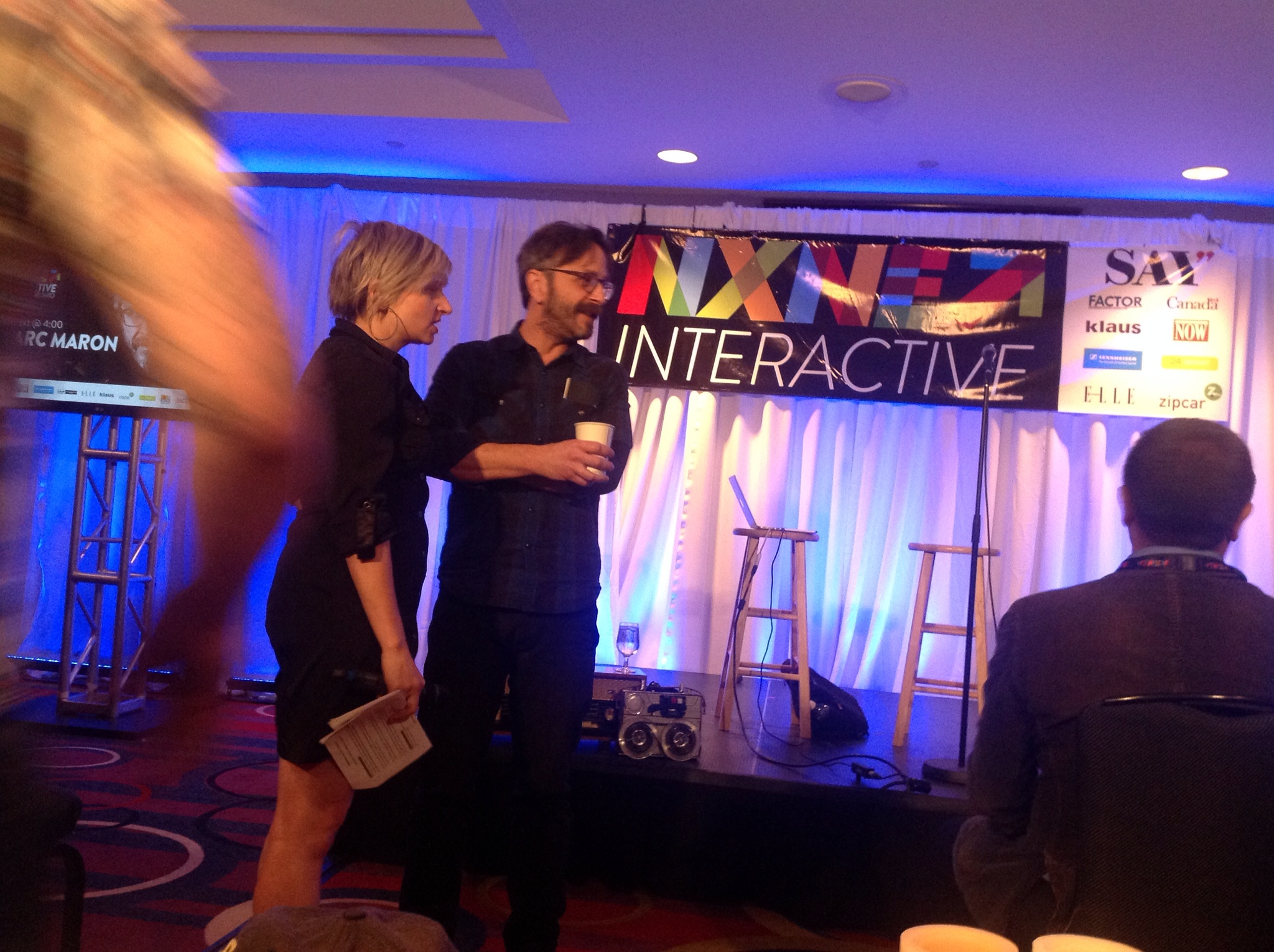
If the visitor happens also to be a fan of live music, particularly indie rock n’ roll, the pleasures of the city are doubled, and then some. One time of year when the pleasures of Toronto’s rock n’ roll tourism are at a peak is the annual North by Northeast Festival (NXNE) which marked its twentieth anniversary this June 13-22. This was the fourth time I’d attended NXNE, which I write about on my blogs The Great Gray Bridge and Honourary Canadian. While NXNE began as a music festival, a kind of northern cousin to SXSW, it now includes Film, Comedy, Interactive, and Art. I attend largely for the music, while taking in other events as time permits, such as comedian Marc Maron’s rousing keynote.
More than 800 artists played NXNE this year, appearing at more than 50 venues spread across the city over five days and nights. The line-ups skew predominantly Canadian, which is fine by me because as I’ve found the past five years I’ve been following the CAN-Rock scene, there are a ton of great bands stretching from St. John’s Newfoundland to Victoria, British Columbia; from Windsor, Ontario—a city that is actually more southern than Detroit—to Nunavit, in the Northwest Territory. For a country of 35 million people, roughly the population of California, this continent-wide country has a remarkably vibrant music scene. me, because it is the Canadian musicians that bring me back each year. Even with the geographic emphasis falling north of the 49th Parallel, NXNE brings in bands from abroad, such as Spoon from Austin, TX, who played a great live show, as did the Felice Brothers from upstate New York.
The first act I saw on my first night out was Shawn William Clarke at a new venue for me, Baltic Avenue (perhaps named for a deed in Monopoly?). I liked Clarke’s self-aware lyrics, and learned that he’s making an album with longtime Ohbijou drummer James Brunton as producer. during the festival was a slow sThe acts I heard this year: Amos the Transparent (“Says the Spark) ; Shawn William Clarke; NQ Arbuckle, Lee Harvey Osmond, the alter-ego of Blackie and the Rodeo Kings member Tom Wilson, who performed with his son’s band, Harlan Pepper, and had Lindi Ortega sing several songs with them; Whitehorse, w/Luke Doucet and Melissa McClelland, with whom they continued the father & son theme, performing with veteran member of Blue Rodeo Jim Cuddy, and the Devin Cuddy Band;

Celebrating 100 Great Canadian Novels–CBC’s Choices + Several of My Own, Including Antonine Maillet’s “Pelagie”

For CanLit fans, a very good books conversation was started over the weekend on CBC Radio’s Cross Country Checkup, which is continuing on the CBC Books website. With tomorrow’s Canada Day in mind, they were discussing a new selection CBC Books has done of 100 Novels that Make You Proud to Be Canadian. These are novels published in English, or translated into it. They’re welcoming new titles for the list, with the first 100 named via this link. I’ve submitted some faves of my own, including one by the amazing New Brunswick author Antonine Maillet, born in 1929. Her novel, Pélagie-la-Charrette (1980, roughly translated as Pelagie: Return to the Homeland), is an historical epic set in the mid-1700s, when the Acadian people, refusing fealty to the British Crown, were evicted from Nova Scotia, sent in to an exile that shunted them down the Atlantic seaboard, or all the way down to Louisiana, where they became known as ‘Cajuns.’ Her epic tells the story of their exile and eventual return to the Maritimes, but only for some. With the novel Maillet became the first woman, and first non-French person of either gender, to win France’s Prix Goncourt. From the flap copy on the current Goose Lane Press edition:

Maillet

“At thirty-five, Pélagie is a survivor of the Great Disruption of 1755, when British soldiers deported Acadians who had farmed along the Bay of Fundy for generations. Splitting up families, the soldiers tossed men, women, and children pell-mell into ships and dispatched them to ports all along the eastern seaboard of the US and to Louisiana. When it was heard years later that the British would tolerate their return to Acadie, thousands loaded possessions and children onto handcarts and set out on foot. After fifteen years of working as a slave in the cotton fields of Georgia, Pélagie, too, has had enough. Drawn home as if by a magnet, inspired by her love of her family and of Beausoleil, a heroic sea captain, and determined to outrace the “Wagon of Death,” Pélagie sets off to take her people on a 3,000-mile trek back to their homeland. Her single cart, pulled by six oxen, soon attracts scattered Cormiers and LeBlancs, Landrys and Poiriers, Maillets and Légers. Together, this caravan of colourful Acadians undertakes a ten-year journey up the Atlantic coast to their childhood homes.”

In 1987, I had the privilege of publishing the US edition of Maillet’s The Devil is Loose, a sea adventure about a female pirate–a kind of maritime Robin Hood; she plunders British merchant ships and gives the booty, especially wine and rum, to the islanders of St. Pierre and Miquelon, the isles (still French-speaking today) in the north Atlantic near Newfoundland. Under a grant from Canada’s Department of Cultural Affairs, Maillet traveled to New York and read from her work at the Americas Society on Park Avenue. I recall she was of quite small stature, and without any airs she stood on a box of printer paper to reach the mic on the lectern. She also created the indelible character of modern Acadian theater, a wise woman/elder figure, “La Saguoine.” Over the years, the CBC has run many pieces about Maillet and her work, including readings by her, that you’ll find here in the CBC Archive.

From CBC Books’ excellent list, I loved reading Marian Engel’s The Bear; Margaret Laurence’s Stone Angel; Robertson Davies’ Fifth Business (and his entire Deptford trilogy, of which this is Book I); Timothy Findley’s The Wars (I was also gripped by his novel Famous Last Words); George Elliott Clarke’s George & Rue, (the US edition of which I published in 2006) and many books by Margaret Atwood, Mordecai Richler, Emma Donoghue, Guy Vanderhaeghe, and Paul Quarrington, though not the particular titles by them that are on the list. As a bookstore owner in Cleveland, Ohio from 1978-85, when a new generation of Canadian writers was bursting in to print, I was very lucky to stock and sell early books by the Atwood/Richler/Findley generation. I sold a ton of copies in the ’80s of everything by Robertson Davies, and as a bookseller, was enlisted by his publisher to urge other booksellers to order and sell more of Davies’ titles. This led to a lengthy correspondence with him that I’ve published in a post on Honourary Canadian, “Why I Write this Blog.” In my publishing career, I’ve also brought out US editions of books by Paul Quarrington, George Elliott Clarke, Steven Galloway, Atwood, and Richler, all of whom have books on the new CBC list.

I’ve suggested a few more novels for CBC’s extended list: The Abramsky Variations by Morley Torgov; all the Benny Cooperman detective novels by Howard Engel, whose superb Memory Book I published in the US in the 2006; Kathryn Kuitenbrouwer’s engrossing circus novel All the Broken Things, in part perhaps an homage to Marian Engel’s The Bear; and the great suspense novel Alter Ego, by the now-retired CBC broadcaster and exec Patrick Watson, who did a signing for it in my bookstore in 1979. Here are covers from many of the books:

Matt Mays at the Cameron House

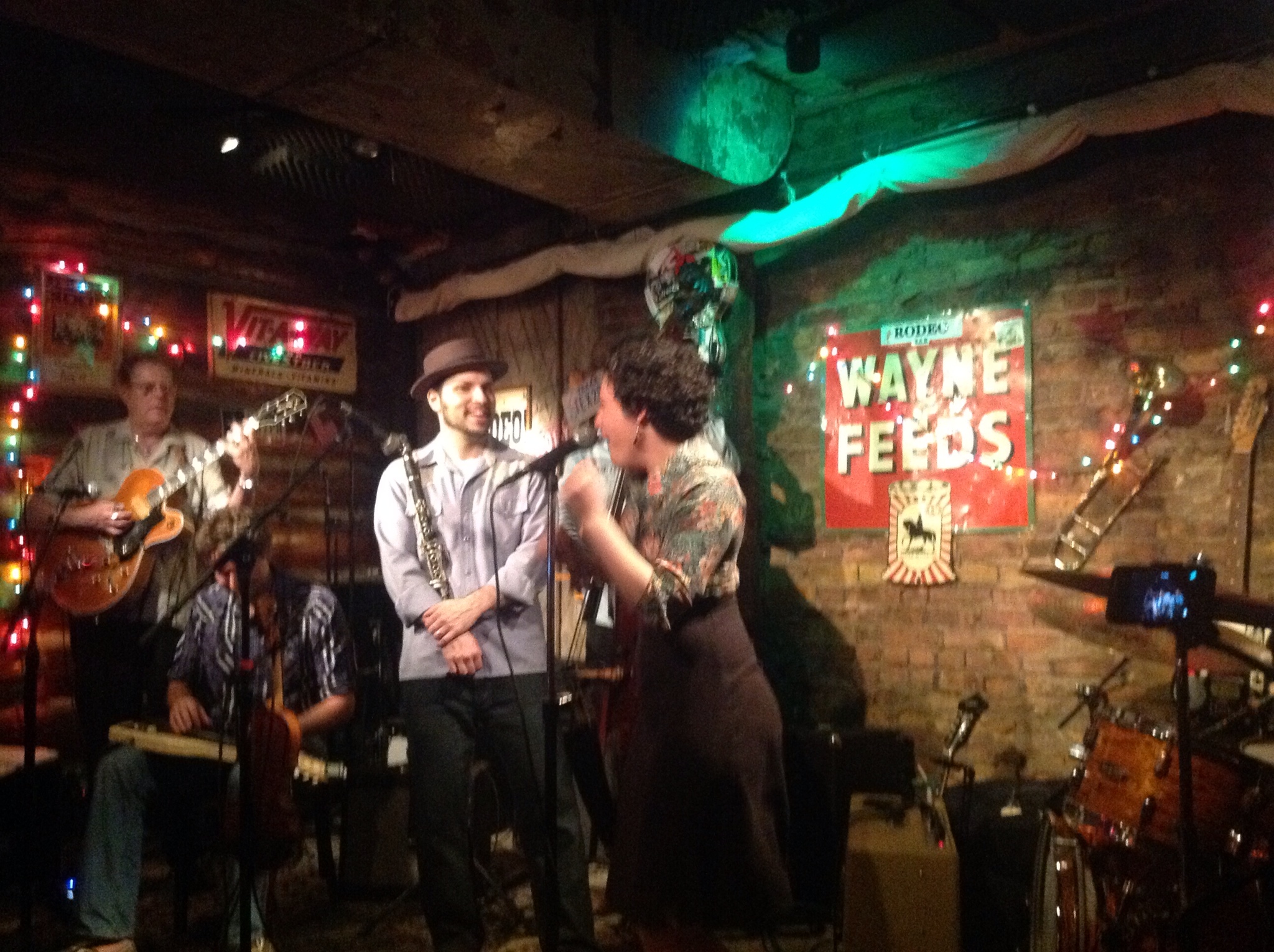
As readers of my blogs may recall, I’m a huge fan of Canadian rocker Matt Mays, whom I saw play live at Toronto’s Lee’s Palace in 2012. Last week in Toronto during NXNE I was delighted to happen on to an impromptu set of live music that included him at the venerable Cameron House, a sweet venue that features two stages and its own in-house record label. I spoke with Mays afterward and we shared some real bonding moments after this 3-song mini set they did. It kicked off w/Neil Young’s “Helpless,” and two songs of Sam Cash’s, when Matt swapped lead licks with Sam’s lead guitarist. I had been standing right in front of them the whole time, less than 6-8 feet away. As he stepped off the tiny stage at Cameron House I reached out my hand and thanked him. I said my name and added, “You recently followed me on Twitter,” just to let him know (figuring he must have so many). He replied, “Oh, yeah, I did that on purpose. I’ve been reading your stuff.” I thought to offer condolences about Jay Smith, adding, “I know it’s been a long time, but I don’t want to miss the chance to say something.” He said, “Oh, that right I there I really appreciate so much.” He said he’s working on a new album, part of the time in LA.
Before I went to bed back in my room, nearly 4am, I tweeted and Facebooked a couple messages w/pics and he and Sam Cash all re-shared them. I was glowing for days, still sort of am.

http://music.cbc.ca/#/artists/Joe-Nolan

http://music.cbc.ca/#/artists/Sam-Cash

http://philipsturner.com/2013/03/30/lose-jay-smith/

NXNE Day I: Marc Maron’s Rousing and Funny Keynote

Great kickoff for NXNE on Day 1, with such highlights as a keynote by comedian and podcaster extraordinare Marc Maron, and a party for musicians and press last night at the Edward Day Gallery.

At Maron’s talk I unexpectedly found myself seated on a couch between Christopher Roberts, director of NXNE, and Michael Hollett, who founded the festival twenty years ago. Maron, passing by the couch, jibed it must be the couch of royalty. I demurred, replying it was actually a sign of democracy, since I had just walked in and sat down at the spot. Maron, with a reputation aas an intense guy, paced the front of the low stage, waiting to get started.

width=500


I first heard Maron’s voice when he was a radio host on Air America in the early 2000s, so even before his podcasting began, I knew him to be an edgy, self-deprecating commentator, which seemed to afford him the right to deprecate others. Stepping on to the stage yesterday, he began by sharing a video of what he called a really embarrassing moment, one he couldn’t watch again, though he asked everyone in the room to do so. In the early days of the Internet during in standup routine he unabashedly derided the new technology, comparing it to CB radios in profane and broad-brush words. Wincing as the video ended, he addressed the several hundred people in the hotel conference room: “I couldn’t have been more wrong about the future. . . .I know nothing, and had no fucking idea how to use my computer. But podcasting has changed my life. . . . I’ve been a comic 25 years. I was depressed. seeking the spiritual reprieve of the faithless. I didn’t really fit in anywhere.” Perching on the edge of his stool, he explained that when Air America collapsed in the mid-2000s, he caught on with another lefty media start-up, but they ran low on funds and let him go pretty quickly. His personal difficulties only grew when he and his wife split up. Though fired from the job, he was told he could continue using his office and the studio for a while. It was during this period that he created the first 12 podcasts of what has since become known as WTF. They were so under the radar in his former employer’s building they had to ask guests to take the freight elevator, lest his former bosses discover what they were doing. “We had no idea what we were doing, and had no expectations,” Maron admitted. He said they’ve now done more than 500 podcasts of WTF.

width=500


After the inevitable exit from the more professional studio, they moved the operation to the cluttered gararage of his two-bedroom house in Los Angeles. He said, after working several years in political commentary, he no longer wanted to work in punditry, as he’d realized his interests and priorities were more existenital. There was pick-up on the early podcasts, with 1200-1500 downloads of each epsiode. He offered simple technical advice for anyone taking up podcasting: “Get good mics.” He said the first 100 interviews were mostly him asking famous people to help him out. They had no business model in place, and no way to monetize what they were doing. But he took refuge in consistency—they put out two episodes per week, releasing them each Monday and Thursday. Robin Williams came on for a very candid conversation, in what became one of their first big deal episodes, producing a breakthrough for WTF.

width=500


He later did a two-part interview with Louis C.K. Then, the manager of the comedian known as Gallagher called and said the comic wanted to come on the show. Maron pressed Gallagher about racist and homophobic bits in his comedy. Gallagher, who’s been known to smash a watermelon with a hammer while on stage, walked out with the mics still on, shouting “That’s not a hammer, that’s a cross.” Maron confessed, “I did sandbag him a bit. He’s an asshole.” In an interview with Carlos Mencia, the guest, often known as a pathological joke thief, saw a chance to reinvent himself. At first, Maron let him get away with it, but then thought better of it, and called him on his prolific thievery. Fireworks ensued.

Maron said, The medium grew with me. I hope I’m giving you the details you want. . . . The podcast saved my life. . . . My partner keeps the numbers: 120 million downloads overall, 3.4 million per month, 20 episodes have more than 300,000 downloads. . . . I lucked out w/this medium, I Just wanted to keep busy. It’s not an empire, it’s a garage. Keep it as intimate as the medium allows, no cameras, no video. Most people listen with headphones, gives me a direct line to their brains. You want to be relevant, not just get a laugh. On making money, he said, I don’t want to gamble, just hold on to what I’ve got.

They now use an app and iTunes to monetize the podcast. The most recent 50 episodes are always free, then the 51st and so on are available via a fee for one-time purchases or via a full subscription. About making money, he said, I don’t want to gamble, I just want to hold on to what I’ve got. He didn’t give any figures, but by his own measure, he seems to be succeeding. They also have ads in the podcast, through an ad network called MidRoll.

During the Q&A I asked Maron about one of my favorites among his podcasts, his conversation with John Fogerty. He said it was challenging because of a bad contract the musician signed when Creedence Clearwater Revival was just starting out back in the ’60s, leaving him without copyright him unable of his own songs for decades. Knowing it could cast a shadow on the conversation if he asked about it, Maron declined to bring it up directly. Finally, Fogerty brought it up near the end, creating a memorably poignant moment in the podcast.

Maron’s closing line was among his very best expressions: “I don’t have a demographic, I have a disposition.” After robust applause, Maron stuck around and shook hands with everyone who wanted to say hello. The fellow ahead of me in line, a comedy booker from a club in London, Ontario asked me to take a picture of him with Maron, which I did, and then the booker did the same for me with my digital camera, which I’ll download and share later.


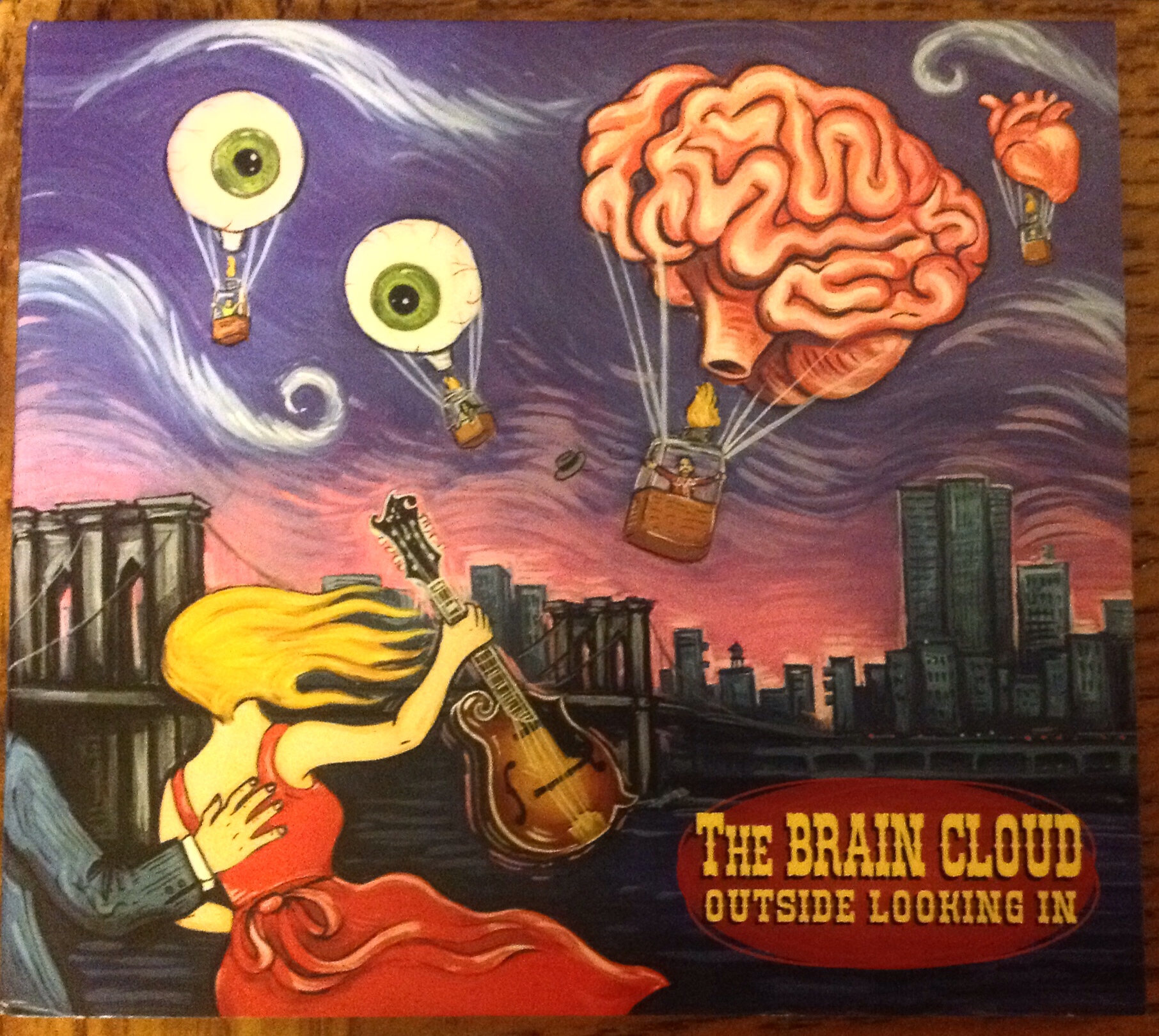
Brain Cloud, On the Bill at Ottawa Jazz Festival, June 28th & 29th

On June 4th Kyle and I went to hear one of my favorite NY bands, Brain Cloud, a six-piece outfit that plays Western swing and '40s standards, and some originals, making it all sound new and fresh. I wrote about the show at The Great Gray Bridge, and then heard this today from frontman Dennis Lichtman:

“We're playing Ottawa Jazz Festival on Saturday, 6/28 and Sunday, 6/29 on the Laurier Ave. stage, 4:00pm each day. Thanks for letting folks know!”

width=500


Three Great Books Chronicling Canadian Rock n’ Roll

width=300
width=300

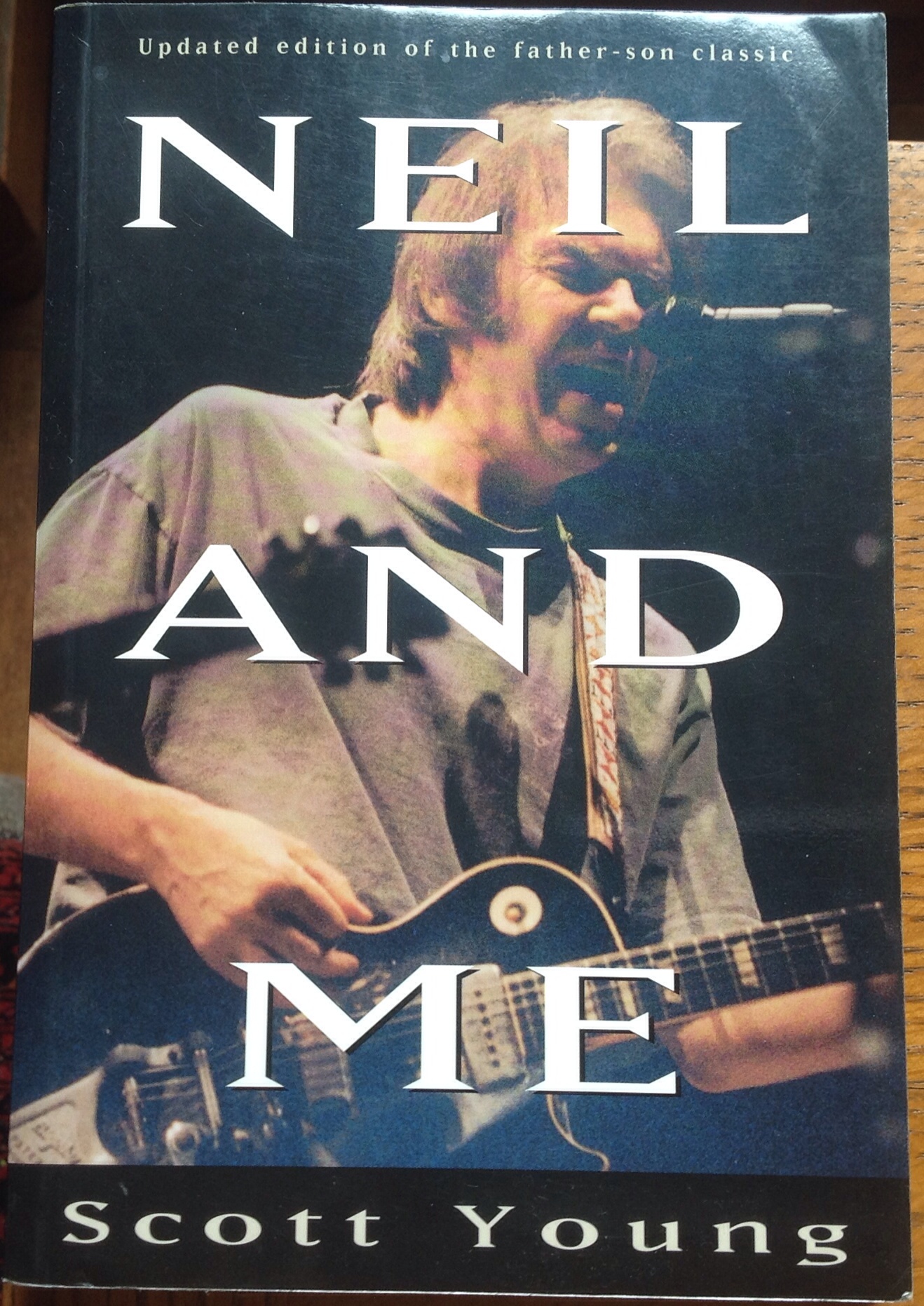
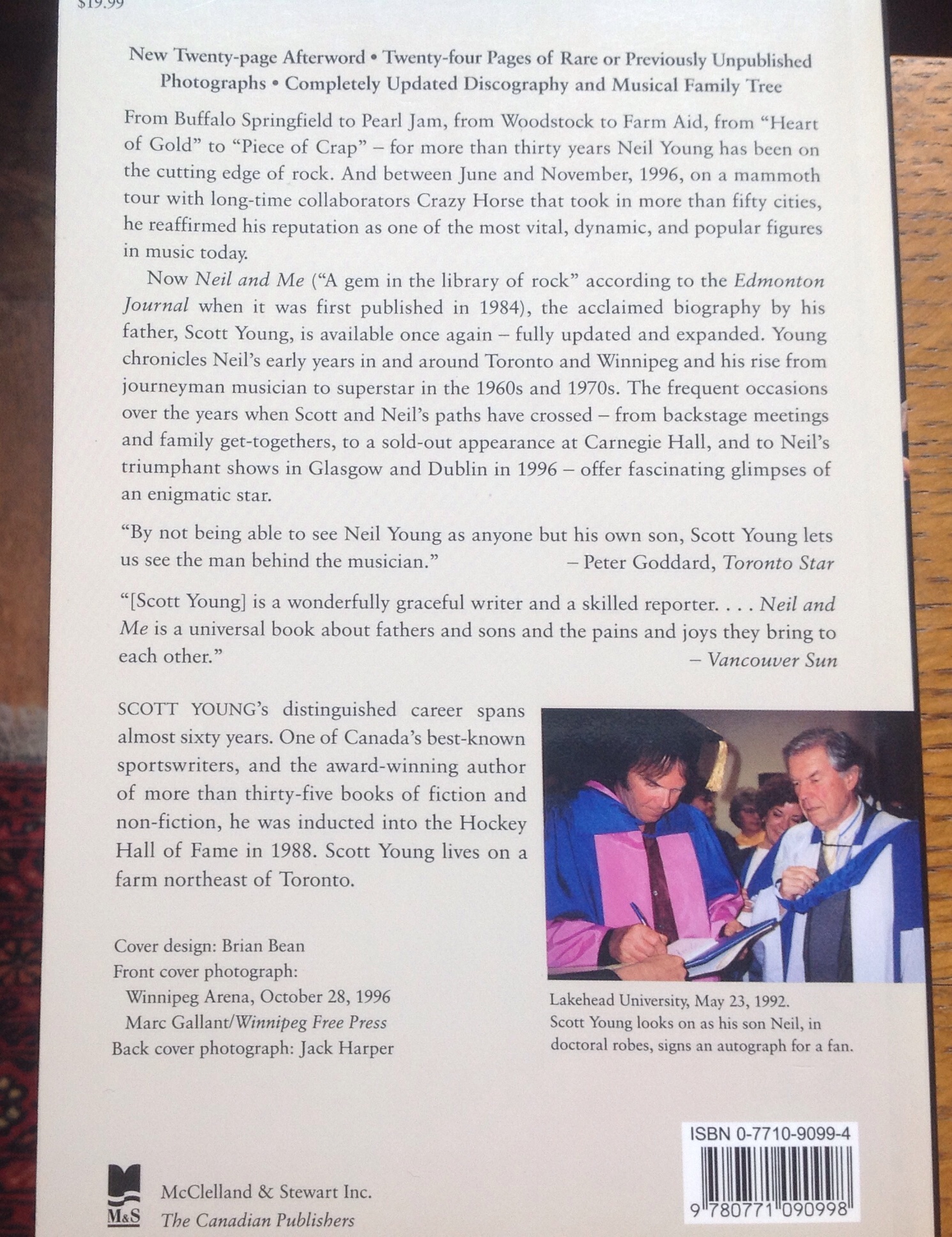
The late Scott Young, Neil’s dad, was a distinguished Canadian journalist and prolific author, a member of the Hockey Hall of Fame, for his years of columns on the sport. He died in 2005 at age 87, having published more than 35 books—novels and nonfiction, some for young readers. His NEIL AND ME (1984) is illuminating on the family’s break-up, when he left his wife Rassy, and Neil, and brother Bob. The chapters about Neil’s music and performing are very enlightening. The elder Young was a very good writer, no less writing about his famous son. An essential book for understanding Neil, it bespeaks all that is heartfelt and sincere about Neil’s songs and career. Especially valuable when read alongside Jimmy McDonough’s Shaky (2002). For other coverage of mine about Neil Young, you may read a post I wrote when Patti Smith interviewed Neil at BEA in 2012.

width=300


width=300

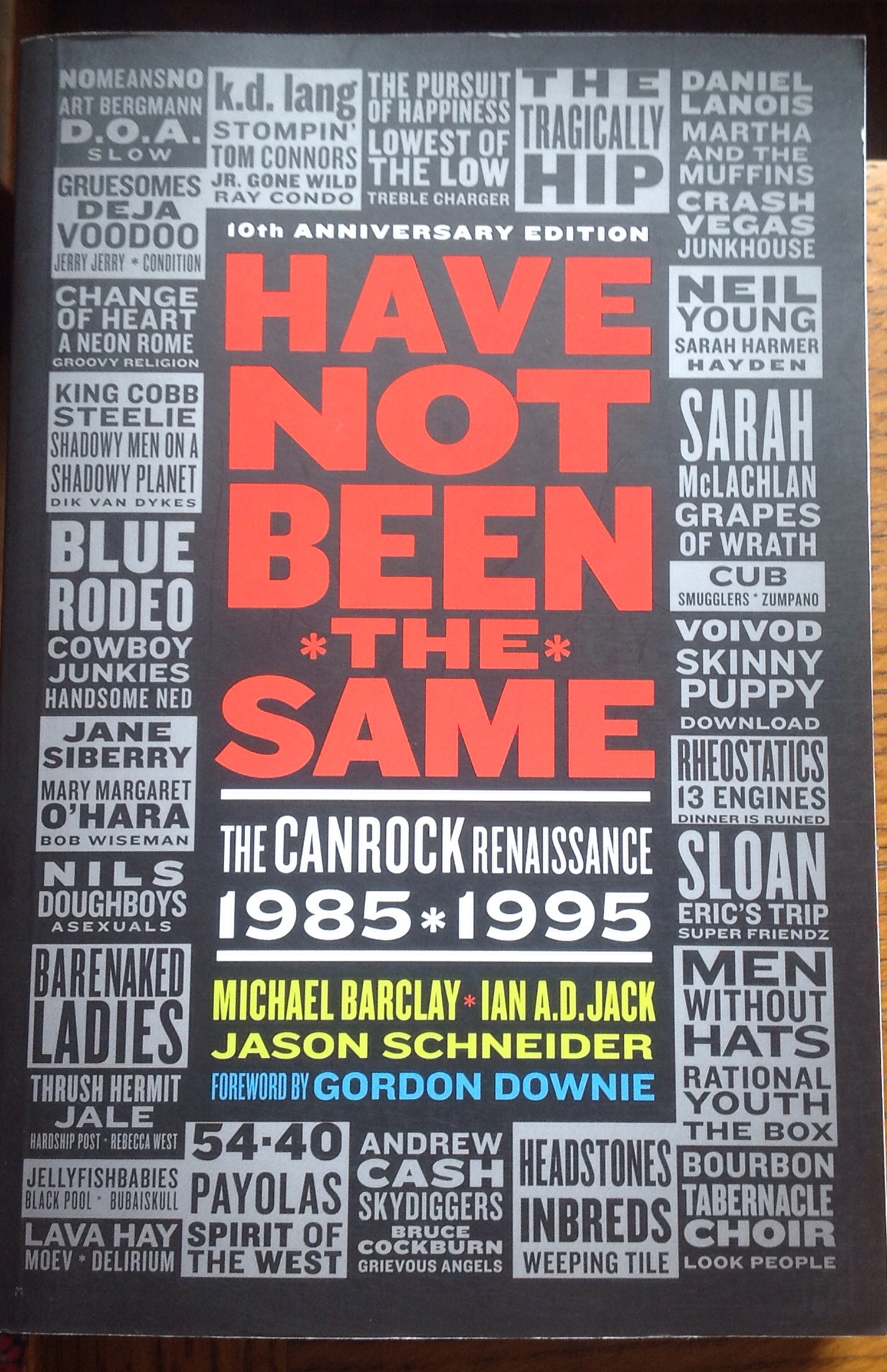
Like a big pot of soup you can feed on for days and days, HAVE NOT BEEN THE SAME: The CanRock Renaissance, 1985-1995 (2001) is a rich broth of a book, with great stories and characters spanning four decades of Canadian rock n’ roll. The 10th Anniversary Edition, published in 2011, was released simultaneously with a CD release that had younger artists covering songs by their musical forbears, bands that had been in the first edition of the book, it was a cool project that I bought and enjoy from the Canadian indie music seller zunior.com. So good you can open it at the start of any new chapter, and just begin reading and enjoying. Kudos to Michael Barclay and his co-authors Ian A.D. Jack and Jason Schneider.

width=300


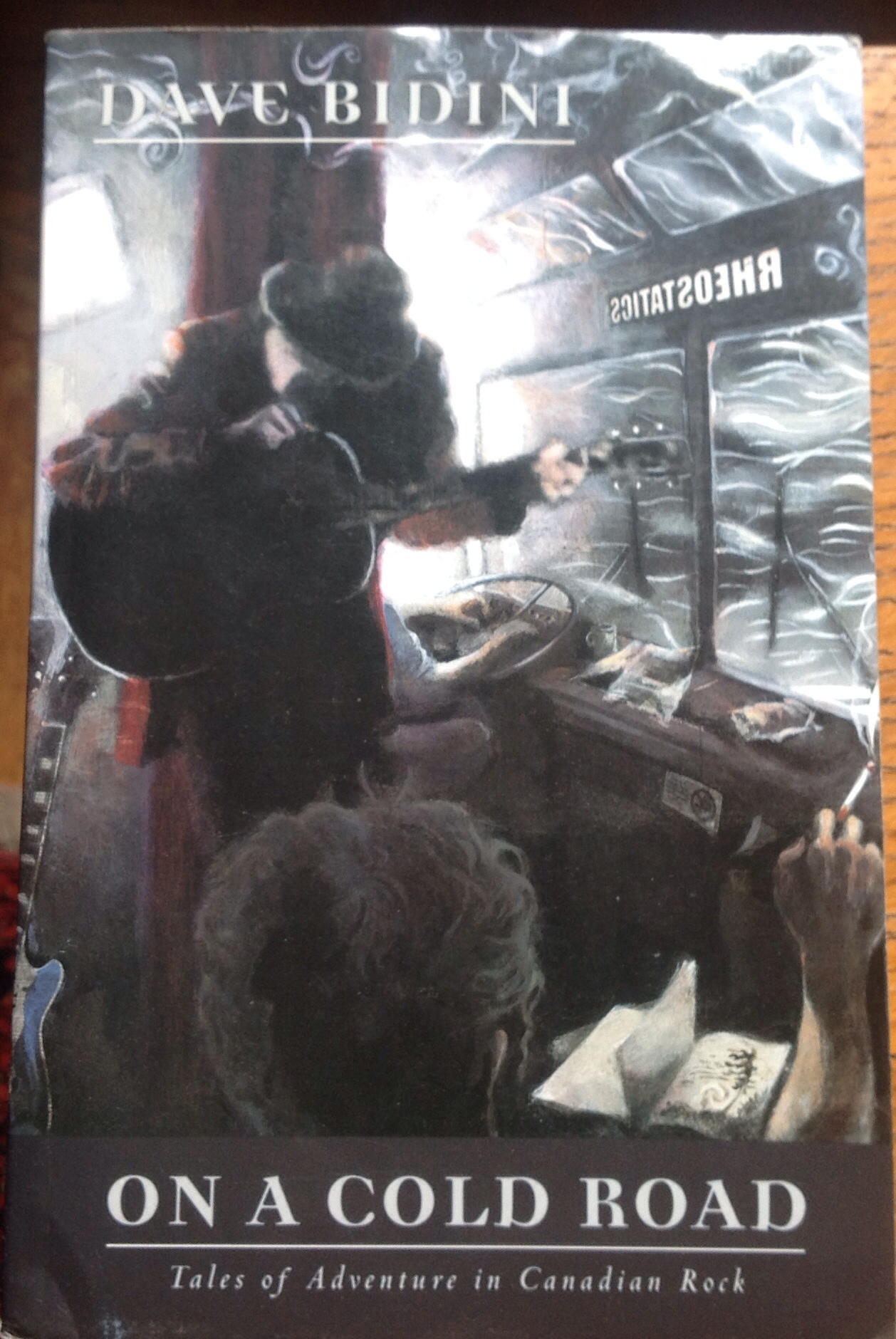
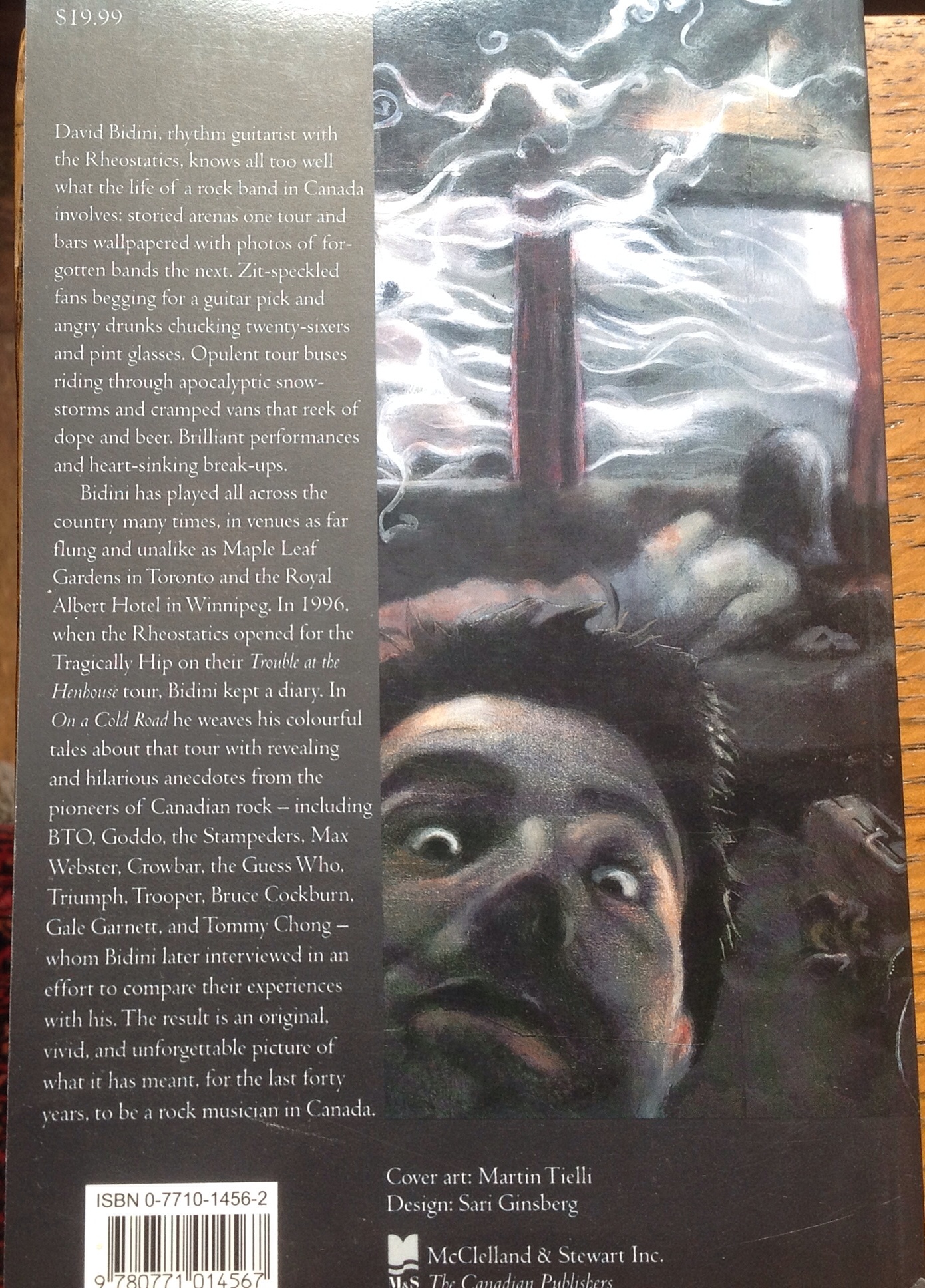
Like the memorable book about the 1960s art scene that swirled around Andy Warhol, EDIE: American Girl by Jean Stein, with a Foreword by George Plimpton, Dave Bidini’s ON A COLD ROAD: Tales of Adventure in Canadian Rock n’ Roll (1998), is a multi-voiced oral history of verbatim recollections by dozens of Canadian musicians, shaped by Bidini who toured for years as part of the Rheostatics. There are many colons (e.g., : ) in this book followed by paragraphs of rich memories. Bidini’s arranged it kinetically, so you feel like you’re bouncing around on the bus, too, as you read funny, outrageous evocations of epic touring traversing the continent-wide country. Full of humor and pathos, it made me laugh, and nearly cry, for the sincere efforts of so many hard-working, hard-partying, hard-striving artists. Bidini is also prodigiously prolific, with twelve books published, including 2011’s WRITING GORDON LIGHTFOOT: The Man, the Music, the World, in 1972. And then there’s his musical career, which now has him fronting Bidiniband. I also enjoy reading him on Twitter @hockeyesque.